
Thursday, July 21, 2011
Tomato Patch


How the Garden Grows

There are three plots this year, combining veg, herbs and flowers.
Totally organic (of course), lush and healthy.
Thought I'd post some photos to show off. This may be the most gorgeous garden I've done. Just wait till the flowers bloom.
Wednesday, March 16, 2011
Why Don't Farm Animals Get the Respect Pets Do? - NYTimes.com
My friend Mark Bittman wrote about the sad lives of most conventional livestock in this country. I bet if most people knew how the majority of animals are treated - especially chickens and pigs - they wouldn't want to eat them. He makes the point that we should be treating animals more humanely, raising them properly, and eating less of them.
Why Don't Farm Animals Get the Respect Pets Do? - NYTimes.com: "- Sent using Google Toolbar"
Why Don't Farm Animals Get the Respect Pets Do? - NYTimes.com: "- Sent using Google Toolbar"
Friday, March 11, 2011
Pound Cake People

I come from pound cake people. My great grandmother, a big-boned sturdy farm wife, was the queen of pound cake. She made hers by hand, beating the butter and sugar with a wooden spoon in a large crockery bowl. It was baked in a large, ring-shaped iron pan in a coal stove with a pan of water in the bottom to ensure it came out moist. Rather than a glaze, she would slather the top with butter and sprinkle it with confectioner’s sugar before slicing.
That pound cake was one of the few sweets the farm family indulged in, my mother says, as their small dairy provided the copious amount of eggs (nearly a dozen per recipe), buttermilk, and butter required.
It's a plain butter cake that's always the star of state fair competitions and every state seems to have its official recipe. My favorite is West Virginia pound cake (where I grew up), a half-pound version that uses confectioner’s sugar in lieu of granulated cane sugar. It has a very fine texture and is wonderful on its own or as a based for a strawberry or peach shortcake. Actually a thick slice makes a supreme breakfast. And it’s even more excellent if you can use some local butter and eggs.
West Virginia Pound Cake
From The Cake Club: Delicious Desserts and Stories, From a Southern Childhood by Susie Quick (St. Martin’s Press, 2005).
Makes one, 10-inch Bundt or tube cake or one, 9 x 5 x 3-inch loaf, serves 12 to 16
1 cup (2 sticks) unsalted butter, softened
1 (1-pound) box confectioner’s sugar, plus more for sprinkling over cake
6 large eggs
3 cups cake flour (not self rising)
1/4 teaspoon salt
1/3 cup whole milk
1 1/2 teaspoons pure vanilla extract
Preheat oven to 350 F. Butter and flour a 10-inch Bundt or tube pan.
Place the butter in a large mixing bowl with the sugar. Beat with an electric miser on medium speed 5 minutes until light and creamy. Add the eggs, one at a time, beating for 1 minute after each addition. Scrape the sides and beaters and then beat in vanilla.
Stir together the flour and salt. With mixer on lowest speed, add the dry ingredients to the butter mixture, a third as a time, alternately with a little milk until just blended. Scrape the bottom and sides to make sure everything is smooth.
Transfer batter to prepared pan.
Bake 50 minutes to 1 hour, or until a long wooden skewer inserted in the center comes out clean and the edges are slightly pulled away from sides of pan. Cool in pan on a rack 20 minutes. Invert pan to a wire rack and cool completely. Sprinkle with confectioner’s sugar before serving.
If you want to try an authentic pound cake recipe, here’s the no-nonsense Fannie Farmer Cookbook recipe (in it's original terseness) from 1918, which is no doubt close to the mother of all pound cakes. If you attempt it I’d half the recipe and bake in a 10-inch Bundt, or 9 x 5 x 3-inch loaf pan. Obviously, you can make up two loaves.
Fannie Farmer Pound Cake
1 lb. butter
Whites 10 eggs
1 lb. sugar
1 lb. flour
Yolks 10 eggs
1/2 teaspoon mace
2 tablespoons brandy
Cream the butter, add sugar gradually, and continue beating; then add yolks of eggs beaten until thick and lemon-colored, whites of eggs beaten until stiff and dry, flour, mace, and brandy. Beat vigorously five minutes. Bake in a deep pan one and one-fourth hours in a slow oven.
Sunday, March 6, 2011
Dipping into the seed catalogs
 |
| Violet Jasper Tomato |
The garden may be beneath a blanket of snow, but in my head there are daisies and lavender spikes waving in the wind, scarlet runner beans climbing the bamboo teepees, and a chicken pecking my nicest, prettiest Brandywine tomato. Yep, I’ve been dipping into the seed catalogs again.
One of my favorites is Baker’s Creek Heirloom Seeds. Baker’s Creek is one of those catalogs with a person -- with Personality-Plus -- behind it. And that person is Jere Gettle, who founded it at age seventeen in an effort to preserve heritage seeds and help in the fight against Frankenfood. In a mere fourteen years Baker’s Creek has won the hearts of a large community of followers who attend the annual Heritage Days festivals, participate in his garden forum iDigmyGarden.com, and subscribe to his magazine, The Heirloom Gardener. I love the ‘enchanted garden’ illustrated covers created by Jere’s mother and the sumptuous descriptions of fruits and vegetables inside. Seed packets are hefty – and with thrift store prices. Baker’s many native heirloom plants as well as those from Asia, Europe, and Gettle’s global travels.
I was really excited to learn from my friend and former colleague, Barbara Jones (now at Hyperion), that she recently signed Jere and his wife, Emilee, to a vegan cookbook deal. Can't wait to see it. Meanwhile I'm making my order list up. It's getting almost impossible to choose. Here are a few:
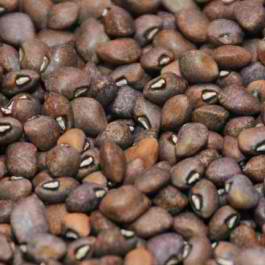
As a southerner, I can't help but grow a couple different varieties of cowpeas (similar to black-eyed peas). This year it's Green-Eyed Pea, a rare Missouri heirloom, Gray-Speckled Palapye, a large-podded early variety originally from Botswana, and Red-Eye Pea, an old KY variety. Violet Jasper tomato, is a new addition, a Chinese variety with purple and green stripes (think Green Zebra) that's supposed to be a super producer. Need to start these soon. I've been growing Baker Creek's gorgeous Forellenschluss lettuce (speckled trout) the last five years. The heads are lovely and sweet.

Tonda di Parigi is a sweet, round 19th-century French heirloom I grow every year as it doesn't require a lot of space. I plant it thickly and harvest the smaller baby carrots first, allowing the rest to grow 1- to 2-inches in diameter. I'm trying a new pea this year, Oregon Sugar Pod Snowpea, a bush-type pea with palm-filling pod that Gettle says is his favorite. He seems to know my taste so I'll be tucking these into the soil really soon.

Friday, February 25, 2011
Minnie Pearl's Chess Pie

Vintage Minnie
Minnie Pearl never said hello and she never said good-bye. You’d pick up the phone and there she’d be. There was no mistaking the voice.
“Did I tell yew to pick me up at eleven-thirty? Then without pausing for my response, “Better make it eleven” Click.
Sitting in her sunny home office next door to the Tennessee governor’s mansion, Minnie worked the phone line like a Wall Street broker. Despite being in her mid-seventies, she maintained a hectic schedule as she micromanaged her career. A typical conversation went like this:
“Where do I need to be? What time? Full costume or just the hat? “ Click.
At twenty-five I could barely keep up. I’d initially learned about the character Minnie Pearl (her real name was Sarah Ophelia Colley Cannon), from her television appearances on the country variety show Hee-Haw, which I watched growing up in West Virginia. I came to know her more intimately when I was assigned – as a feature writer for a Nashville newspaper – to assist her in writing a weekly column about the early days of hillbilly music and the Grand Ole Opry recounting her exploits in the company of such luminaries as The Gully Jumpers, Possum Hunters, and Uncle Dave Macon and The Fruit Jar Drinkers.
As Minnie’s co-writer, I often visited her spacious, California-style stucco home with a rose garden and swimming pool, where I tape-recorded her stories for articles. At eight o’clock on these mornings she’d be at her desk sipping Pepsi with her finger ready to hit the pause button for frequent, off-the-record asides – usually the best part of the story – or a colorful, R-rated joke that would never make the Opry act.
I relished my time with Minnie who sometimes acted out the dialogue of her stories. Once, she spontaneously picked up an umbrella and twirled it to an old song-and-dance number she recalled from childhood. I was going through a divorce at the time and, sensing my need for a mother figure, she adopted me as her wayward child whom she counseled in matters of business and love. Between her monologues, Minnie interjected life lessons she learned as a single woman traveling with all-male hillbilly bands. She never hesitated to chastise me for a romantic interest if it happened to be a musician (not unusual in a town like Nashville). “You mustn’t take them seriously,” she’d say, somewhat annoyed that she had to remind me of this yet again.
Minnie’s personal style was the antithesis of her cornball stage character dressed in a gingham dress, straw hat with a $1.98 price tag, and size ten Mary Janes. She had a flair for fashion (in a wedding photograph of Minnie and her husband, Henry Cannon, Minnie is dressed in a leopard-skin coat, chic wool suit, alligator pumps and matching handbag), and was a voracious reader of literature and liked to quote poet Edna St. Vincent Millay. Her years at an exclusive finishing school where she studies “dramatics” were still evident in her speech and mannerisms.
Her politics were Ronald Reagan-conservative and she was crushed, after receiving an award from him in the Oval Office in the mid-1980s, to discover the man whom she admired “wasn’t all there.” I accompanied her on that visit. We met afterwards in the Round Robin bar at the infamous Watergate Hotel for a drink. Minnie took a long drink of Bourbon, patted me on the knee and said in her inimitable direct fashion: “Let me be the first to tell you James Baker is running this country.”
I was spending more and more time with Minnie as her driving had been curtailed due to her failing vision. I became a part-time chauffeur of sorts, driving Miss Minnie hither and yon in her yellow Eldorado as she read through the week’s column. (For a while I was well-known at the Opry security gate). She usually gave the column short shrift and mostly I listened as Minnie held forth on some interesting person she’d met or a book she’d just read. As in life, when it came to conversation Minnie preferred the state route to the freeway.
Minnie loved to go out to lunch, usually at a music business hangout where she received lots of attention. If the well-wisher was a handsome man, all conversation stopped as she focused completely on him. Minnie adored men and had a way of making them feel as if they were the most fascinating specimen she’d ever encountered. Despite her senior status, Minnie was still a very sexy, attractive woman and relished in these occasional flirtations: “Oh mercy, but you’re such a smart man…and sooo handsome!” To Minnie this was lunch.
But nothing compared to being in the kitchen with Minnie and her longtime housekeeper, Mary Cannon (no relation), as both were incredible cooks. Their fussy banter was like a comic routine. Minnie would sample a dish and observe that perhaps it needed a bit more this or that. Mary would roll her eyes, fold her arms over her bosom and shake her head, “There she goes again … would you leave me be and get on out of here?”
Minnie, in fact, wrote a self-published cookbook (Minnie Pearl Cooks, 1970), filled with great southern classics. I still use it all the time. It includes Mary’s shockingly good hot-water corn cakes and a beef stew that, I’m sorry, beats Julia Child’s boeuf bourguignonne hands down. The first time I made the recipe it tasted nothing like what came from the oven at Minnie’s. Then one day Mary shared the secret, missing ingredient – several glugs of Maker’s Mark. Just like most southern households, there was always a sweet on the kitchen counter like buttermilk pound cake, warm blackberry cobbler, or chess pie, the original crack pie (as addictive as the drug) in my book.
Our friendship continued beyond the life of the column and after I moved to New York. Minnie had her doubts about my leaving: “I worry about you there …” she wrote to me in a note with a book she sent me (southern writer Celestine Sibley’s autobiography, Turned Funny.)
I saw Minnie before a series of debilitating strokes and shortly before she died fifteen years ago (March 4, 1996). I was visiting from New York where I was working as an editor for Glamour magazine. I drove the familiar route to Minnie’s house to take her to the Opry matinee. She was outside working the New York Times crossword puzzle (a daily routine), on the hood of a new yellow Eldorado. She looked tired standing on the Opry stage waiting for her cue but when the stage lights found Minnie she brightened with a brilliant smile and years fell away as she spun her stories and jokes to an appreciative audience. She stopped to chat with a few fans and sign autographs on the way out, something she’d done for more than fifty years.
On the way home she seemed little melancholy. She told me she hated to see me go but knew it was where I needed to be.
“That’s where I would have gone at your age. To Broadway,” she said. “But I could never get the Nashville dust off my shoes”.
That was the last time I saw Minnie, but it ended the same way as always. Minnie said what she needed to say. She did not say good-bye.
Minnie Pearl’s Chess Pie
Chess pie has nothing to do with the game. A bit of a cousin to a vinegar pie or pecan pie, chess pie contains cornmeal (not really detectable) as a thickener, and lemon juice to offset the sugar. It’s particularly good served with a strong cup of coffee or espresso. There are theories as to its origins including its derivation from an English cheese pie or it’s storage in a pie “chest,” which was shortened to “chess.” The ingredients are simple yet tasting it you’ll be impressed by how a simple gooey wedge can be so fabulous. Truly it’s one of the all-time great southern pies.
Makes 1, 9-inch pie; serves 6
1 blind-baked 9-inch Butter Piecrust (recipe follows)
4 large eggs (preferably country eggs)
1 1/4 cups cane sugar
2 tablespoons white cornmeal
4 tablespoons unsalted butter
1/4 cup fresh-squeezed lemon juice
1 tablespoon finely grated lemon zest
1/4 cup whole buttermilk
1/2 teaspoon salt
Confectioners’ sugar for dusting
Prepare the piecrust and blind bake it as directed. Cool completely.
Preheat oven to 375 degrees F. Place the eggs in a large bowl and beat on low speed. Gradually add remaining ingredients (except confectioners’ sugar, obviously). Beat until well combined. Pour into the pie shell and place on a rack in the lower third of the oven. Bake 15 minutes; reduce heat to 350 degrees F and bake 20 to 25 minutes longer, or until sides are beginning to pull away from the crust (the center may be slightly jiggly).
Transfer to a rack to cool. Serve warm or room temperature. Sprinkle with confectioners’ sugar before serving.
Butter Pie Crust
Makes enough for one, 9- or 10-inch pie crust or tart
1 1/2 cups all-purpose flour
2 teaspoons sugar
1/4 teaspoon salt
1/2 cup (1 stick) cold, unsalted butter, cut into small pieces
4 to 5 tablespoons ice water
In a food processor bowl (or by hand with a pastry blender), combine the flour, sugar, salt and butter. Pulse until fine crumbs form. Add 4 tablespoons of water and pulse (or mix with fork), until the dough just holds together. If necessary add a little more ice water.
Turn dough out onto a piece of plastic wrap and using the wrap, gently press the dough into a flat, burger-shaped disc. Wrap tightly and refrigerate 30 minutes.
Roll dough out on a lightly floured surface to a 1/4-inch thickness (a 13-inch round for a 9-inch pie plate). Place in a pie plate or pan and trim so you have a 1/2-inch overhang of dough. Fold under and crimp the edges. Pick the shell a few times with a fork and refrigerate 30 minutes.
To blind bake: Preheat oven to 375 degrees F. Line shell with a piece of wax paper filled with pie weights, dried beans or rice. Bake 10 minutes. Remove wax paper and weights. Return pie shell to oven to bake 5 minutes. (To fully pre-bake the crust, bake an additional 5 to 6 minutes until crust is golden.)
Wednesday, February 9, 2011
Listening to Wendell Berry
I've had the pleasure of meeting and hearing Wendell Berry speak about the state of agriculture and the importance of local food systems several times. If you ever have the opportunity, definitely go see him. In the meantime, you can read one of his books, such as The Unsettling of America: Culture & Agriculture. I recently came across an interesting article with Berry written five years ago by Louisville writer, Holly M. Brockman.
Here's an excerpt:
Here's an excerpt:
"Because the most secure, freshest and the best-tasting food supply is local food produced by local farmers who like their work, like their products and like having them appreciated by people they know. A local food system, moreover, is subject to the influence of its consumers and the dangers and vulnerabilities of a large, high-centralized, highly chemicalized, industrialized food system held together by long distance transportation. A locally adapted local food economy is the most secure against forms of political violence, epidemics and other threats."
Subscribe to:
Posts (Atom)